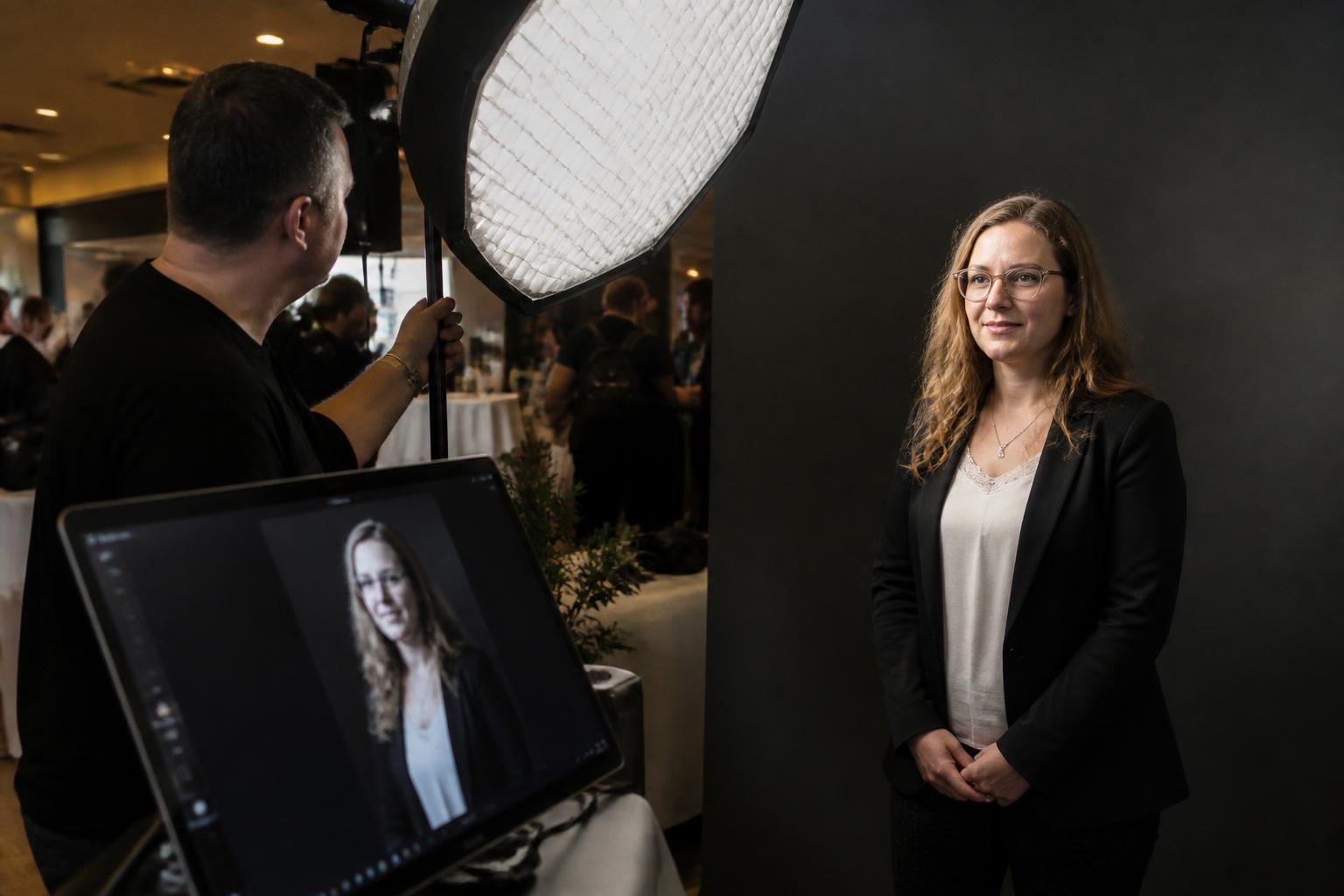
A good starting point for an AI portrait is a sharp, properly lit photo in which the important details of the face are visible. The exact pose depends on the chosen style and the service being used, so the on-site staff's guidance is the best reference.
Creative transformation can change a lot in the image, but it's not a good idea to rely on it perfectly guessing every hidden detail. A calmly taken base photo is a better starting point than an awkward, half-turned moment that would have to be rescued afterward.
Keep the face visible
A large prop, glasses slipping into the hair, or a hand raised in front of the face can hide important details. For AI Caricature and Selfie AI portraits, it's worth choosing a pose from which personal features can be clearly interpreted.
This doesn't mean everyone has to look the same way. A distinctive hairstyle, glasses, and a characteristic expression can be part of what makes someone recognizable. The goal is for these to be visible, not for them to disappear.
You can plan around glasses too
Strong reflections on the lenses can hide the eyes. In such cases, a small adjustment to the lighting or the tilt of the head can help, but it's best to leave the adjustment to the staff running the photo session. The guest shouldn't have to guess which way to turn.
If your glasses are an important part of your look, let the staff know you'd like to see them in the result. Details in the generated output can vary, so a specific style is best checked with several test shots.
How big a smile works?
A natural expression that suits the desired image is a good starting point. An elegant portrait and a strongly playful caricature aim for different effects. An exaggerated grimace can also become more pronounced during the transformation.
For Selfie Swap individual face-swap photos, separate instructions may be needed. Don't assume that the same group pose or expression works equally well across every AI solution.
As an organizer, ask for a varied test
Don't choose a style based on a single sample portrait alone. Look at it with different hairstyles, glasses, expressions, and appearances. This makes it easier to notice if the visual style produces a less fortunate result for some guests.
An AI image is a creative rendering, not a guaranteed, unaltered documentary photo. It's worth briefly explaining this to participants as well.
Take a look at the AI photo experiences, and choose a style your guests will be happy to see themselves in.