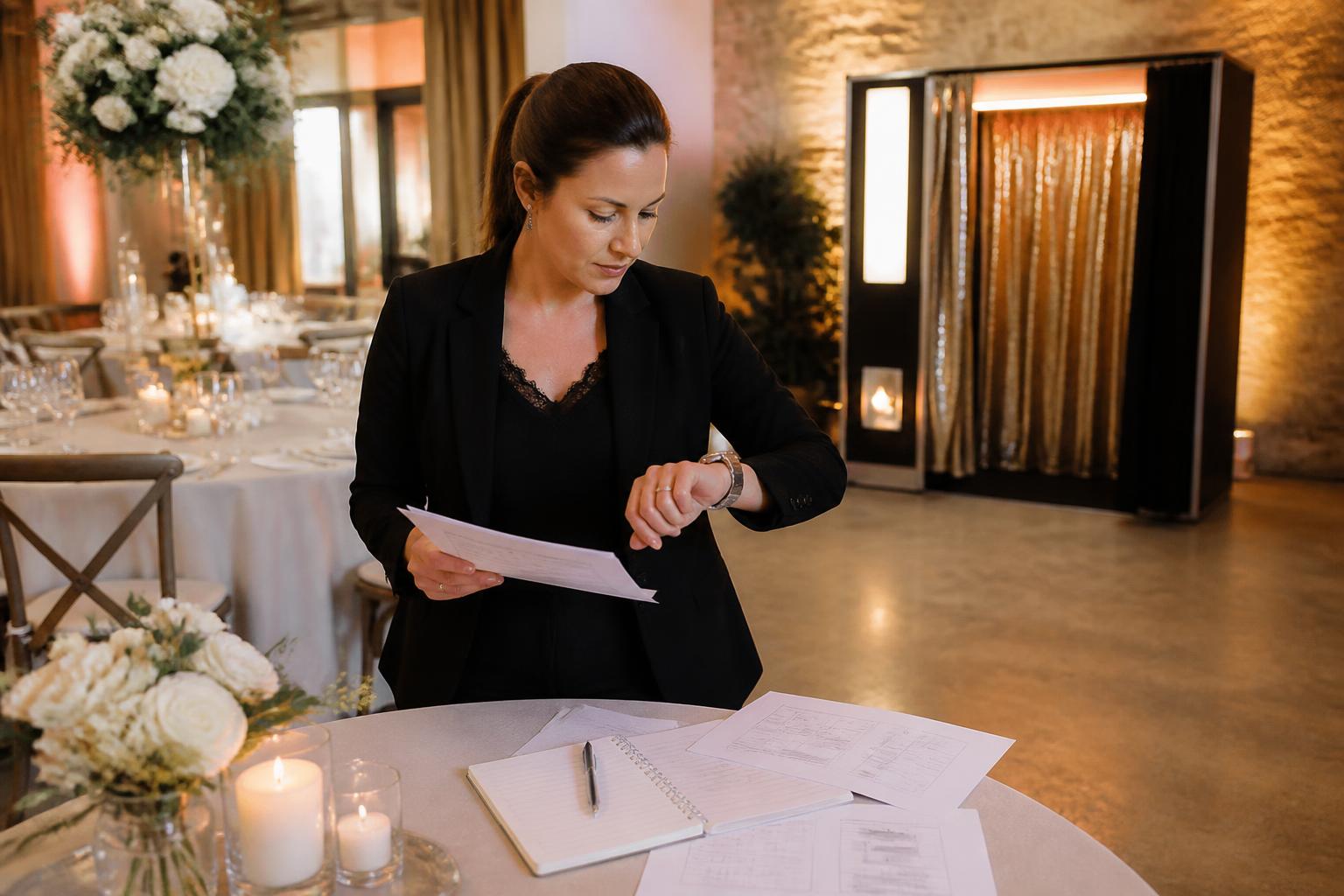
It's worth matching the selfie machine's rental time to when guests can actually take photos. The timing of dinner, speeches, the stage program and departures says more than the total length of the event on its own.
At a six-hour event, there may easily be only two or three freer stretches suited to group photos. The photo booth is a patient device, but the booked time is only useful if guests actually get to it in the meantime.
Map out the genuinely free time slots
List arrival, the fixed program items and the open-ended parts one after another. Mark when there's free movement and when many people are likely to head for photos at once. A conference break is short; a chat after dinner is more flexible.
At a wedding, think about family members who leave earlier. At a corporate event, also check when the organized transfers start. Photos may be available on paper even while part of the group is already on the bus.
A simple timing example
Say guests arrive at 6 pm, dinner runs from 7 to 8 pm, and an open program follows afterward. One option is to build around the reception and the evening part, but the conditions for a possible break during dinner need to be agreed separately.
This is a planning example, not a ready-made package offer. Don't automatically assume the service can be paused, or that the wait between two time slots is free of charge. In the personalized quote, the start, the end and every break should be clearly stated.
Setup is separate time
The SelfieBox datasheet specifies setup before the start. Keep the on-site preparation separate from the operating time provided to guests. The same goes for teardown: this shouldn't get mixed up confusingly with the photo program either.
Ask about the option and conditions for extending the time too. It's good to know what happens if the evening runs longer, but don't count on extra capacity definitely being available on the spot.
When is it worth leaving more time?
If guests arrive in several waves, you want a lot of group photos, or a creative style choice is also part of the process. With the AI portrait experiences, choosing a style and viewing the result also takes time.
With an accurate schedule, it's easier to choose an operating time that doesn't just sound long, but is also genuinely usable during the event.